
Release timing
The best time to release ladybugs.
Dusk releases at 55–80°F outperform every other approach. Here's the reasoning, the data, and the season-by-season guidance.
Direct answer
When is the best time to release ladybugs?
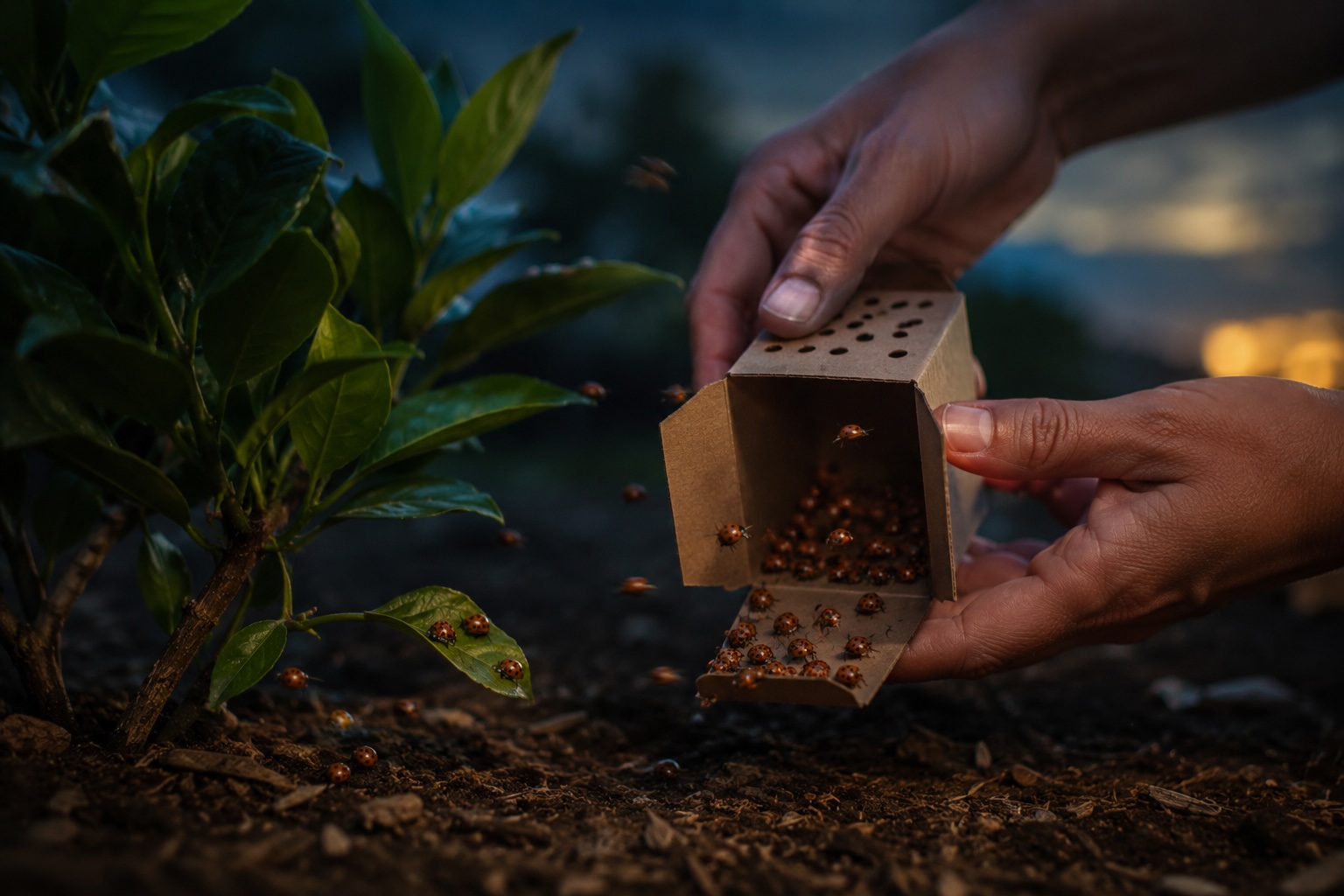
Release ladybugs at dusk or just after sunset, when temperatures are 55–80°F. Cooler air and lower light reduce dispersal. Avoid mid-day heat, freezing nights, and high winds.
- Time of day: dusk – just after sunset
- Temperature: 55–80°F
- Season: spring through early fall
- Mist plants right before release
- Avoid hot, dry, or windy conditions
Why dusk releases work
Adult ladybugs are diurnal, but they hunt and breed most actively at moderate temperatures — not in mid-day heat. Releasing at dusk gives them ~12 hours of cool, calm conditions before sunlight returns, which is enough time to find prey, settle into the foliage, and begin feeding.
A release at noon does the opposite. The container opens onto hot foliage in direct sun; ladybugs immediately seek shade and lift off in search of cooler conditions. Dispersal — not pest control — becomes the outcome.
The other variable that matters is moisture. Ladybugs drink water droplets, and they tend to settle where moisture and food are both available. Mist the plants and surrounding soil before releasing.
Season-by-season guidance
Early spring
Once nighttime lows clear 50°F. Aphid pressure is often building — this is preventative timing.
Late spring
Peak release window. Pest populations are growing, weather is mild, beneficial insects establish well.
Summer
Dusk releases only. Mist heavily. Indoor and greenhouse releases tolerate warmer days better than open garden releases.
Early fall
A second strong window as temperatures cool. Useful for end-of-season aphid flares on fall crops.
Late fall & winter
Open-garden releases are unreliable below 50°F. Indoor, greenhouse, and cannabis cultivation can continue year-round.